
. .     Home   •   About the Site   •   About the Museum   •   Visit www.penobscotmarinemuseum.org .  .

 .  .  .  .
.
.
Penobscot Marine Museum
Learn AboutSpecial Features

Search Our Collection
 .     
 .
right frame  
.
.
 .
image  .

Maine and the Orient:

Exports to the Orient


In the post-Civil War years America found new goods to export to the Orient. Ships carried coal, wine, beer, fish, iron, tar, chocolate, candles, steel, beef, flour, and, of course, silver dollars. Few, if any, products from Maine were exported to the Far East: by this time even lumber came mostly from the Pacific Northwest. One exception was ice  from the Kennebec River, which was carried to Calcutta, Bombay, and Batavia.

In the latter part of the 19th century, Americans exported kerosene, also called case oil or illuminating oil, to China, Japan, and India.  Kerosene was first refined about 1850 from asphalt and shale extracts. After 1859 oil wells in Pennsylvania became the primary source.

frame
  photo  
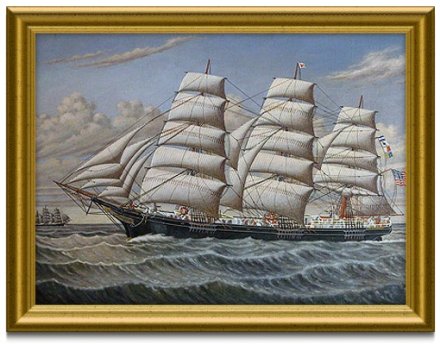
frame Ship Manuel Llaguno in Hong Kong Harbor spacer
 .  .  .  .  .

frame
  photo  
frame Bangalore at Bayonne, NJ spacer
 .  .  .  .  .

Kerosene was safer and cheaper than oil as a fuel for lamps. The Standard Oil Company produced cheap lamps and small stoves that contributed to a rapidly-expanding Asian market for petroleum products, which by 1890 ranked fourth among all American exports. Kerosene was shipped in square 5-gallon tin cans, packed two to a wooden case. A large sailing ship could carry over 100,000 cases. In 1900, 19.5 million gallons of case oil were exported to Hong Kong, as well as 1.4 million barrels of wheat flour, and 3 million pounds of iron and steel. Ships also carried grain from California, mercury, lead, meats and cheeses, and cotton cloth. Despite these large numbers, trade with Hong Kong was less than 10% of the overall United States trade with China.

By the late 19th century, the value of Japanese exports to the United States exceeded that of the Chinese.

By 1910 sail transport of case oil was dying out, as tank steamers took over.

The Bangalore is shown above loading 65,000 cases of oil for Calcutta. In the early twentieth century she was commanded by Captain Phineas Banning Blanchard of Searsport. The Belle of Bath, at right, was owned in Searsport and was destroyed by fire in 1897 while bound from New York to Hong Kong loaded with case oil.

frame
  photo  
frame Ship Belle of Bath spacer
 .  .  .  .  .


 . lifebuoys

  User's Guide
Routes to the Orient

History of Trade with the Orient

The Old China Trade: Before 1842

Opium and the Opening of China

America Enters the Oriental Trade

Japan

Exports to the Orient

The Australian Market

Influence on Ship Building

Imports from the Far East

The Coolie Trade

The Colcord Family of Searsport

 
 .
For Educators
 .
Resources
 .  .  .  .

hr

Related Links and Downloads:


 .  .  .
 .
.
 .  .  .  .  .  .

.   © Penobscot Marine Museum     Home   •   Contact   •   Credits   •   Sitemap .
