
. .     Home   •   About the Site   •   About the Museum   •   Visit www.penobscotmarinemuseum.org .  .

 .  .  .  .
.
.
Penobscot Marine Museum
Learn AboutSpecial Features

Search Our Collection
 .     
 .
right frame  
.
.
 .
image  .

Working The Bay:

Nineteenth Century Industries: Shipbuilding


frame
  photo  
frame Shipbuilding inside hull spacer
 .  .  .  .  .
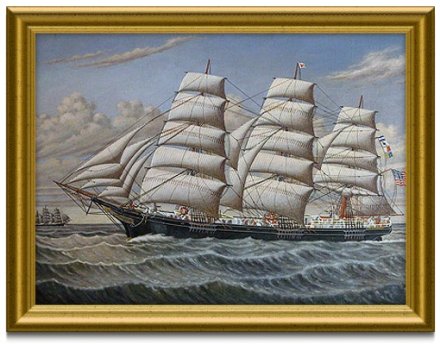
From the late 1700s on, shipbuilding was a vital industry on Penobscot Bay. Between 1770 and 1920, towns around the Bay built about three thousand vessels.

In early years, most were small sloops, schooners, and brigs used for coastal trade to Boston or to the West Indies. There was little capital to build larger vessels until the 1840s. By then, Bay trades were growing well, and the demand for larger vessels also grew. Most of the clipper ships of the 1850s came from southern New England and New York; fourteen were built on Penobscot Bay.  Most notable was the Red Jacket, built in Rockland. After the Civil War, as shipping declined nationally in the face of foreign competition, Maine builders became well known for their large square-rigged ships now called Down Easters. From the 1890s to 1920, Maine shipbuilders built large four, five, and six-masted schooners, typically used to carry coal and lumber.

frame
  photo  
frame Caulking mallet spacer
 .  .  .  .  .

Unlike some of the Bay’s other industries, shipbuilding did not require a large investment in equipment and buildings. Shipyards were easy to set up, but needed money for materials and labor. Often neighbors chipped in and were aided by one or two investors from cities such as Boston or New York. Some lime, lumber, and granite companies owned their own fleets.  Captains typically owned one eighth or more of the vessel. Fishing vessels were usually owned within one or two families.

Shipbuilding required specialized skills. Most of the craftsmen were subcontracted laborers rather than full-time employees, and included loftsmen, sawyers, [ship's carpenters], caulkers, joiners, painters, and riggers.


 . lifebuoys

  User's Guide
Penobscot Bay's Geography and Resources

An Extractive Economy and an Industrial Economy

Work in the Colonial Era

Nineteenth Century Industries: Lime

Nineteenth Century Industries: Lumber

Nineteenth Century Industries: Granite

Nineteenth Century Industries: Bricks and Ice

Nineteenth Century Industries: Fishing and Agriculture

Nineteenth Century Industries: Shipbuilding

Other Nineteenth Century Industries and Working Life

Shipping

Changes in Industries and the Rise of Tourism

 
 .
For Educators
 .
Resources
 .  .  .  .

hr

Related Links and Downloads:


 .  .  .
 .
.
 .  .  .  .  .  .

.   © Penobscot Marine Museum     Home   •   Contact   •   Credits   •   Sitemap .
